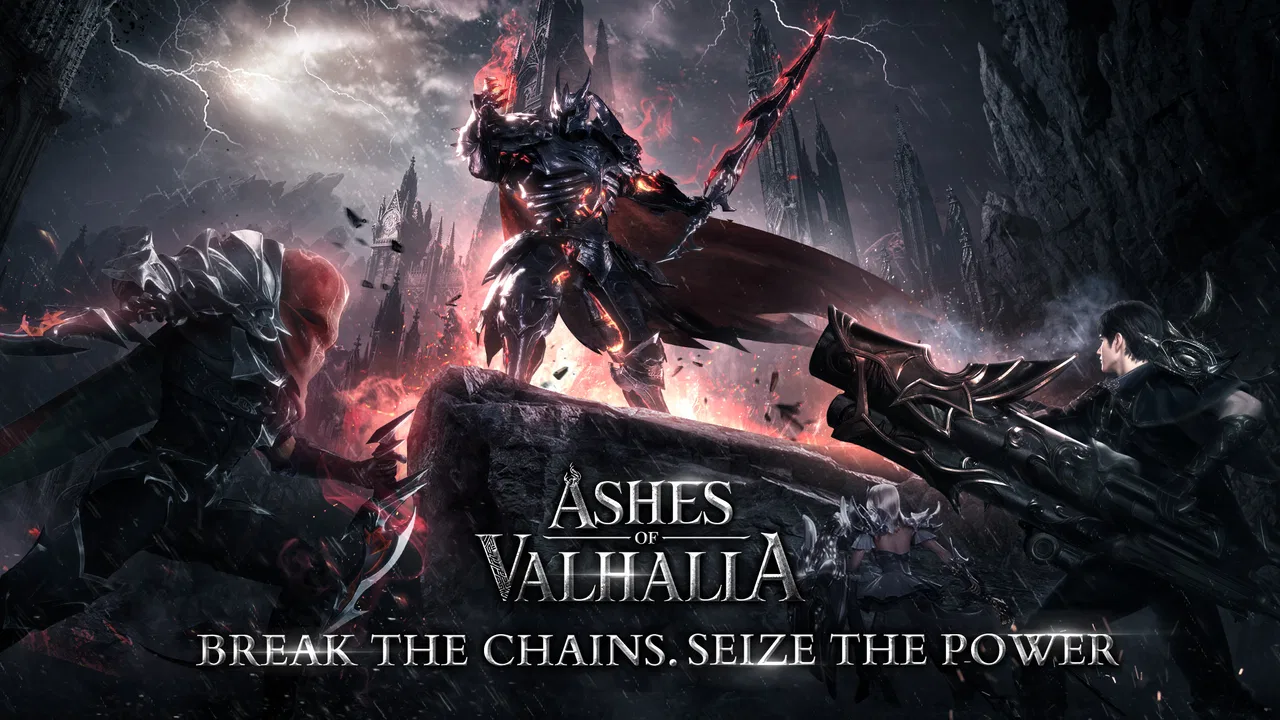
Ashes of Valhalla
- 4.6
- Rating
- 500.00K
- Installs
- Free
- Price
 Analysis by App-foxy
Ashes of Valhalla is a free role-playing game from SPGFun that immediately caught my attention with its central promise: taking on Valhalla rather than simply admiring it. That aggressive premise gives the game a sharper identity than many fantasy RPGs, where the player is usually asked to save a kingdom, gather heroes, or follow a familiar chosen-one story. Here, the appeal is built around power, destruction, and the feeling of pushing into a mythic world that is meant to be challenged.
I approached it as a game for short sessions rather than something I would play continuously for an entire evening. That distinction matters. Its strongest quality is the way its dark Norse-inspired framing gives ordinary progression a clear emotional direction. Every improvement feels connected to the larger idea of becoming strong enough to burn through an impossible realm. If you enjoy role-playing games that put atmosphere and escalation ahead of a gentle introduction, this is an intriguing choice.
The game currently carries a 4.6 average from around 32 thousand ratings, with more than 500 thousand installs. Those figures suggest that it has found an audience, but they do not tell you whether it suits your preferred pace. My experience is that the game works best when you want a focused fantasy challenge with a dramatic tone, not when you are looking for a deeply social RPG or a quiet, story-first adventure.
You May Also Like

 Blood Strike: 2.5 Anniversary
Blood Strike’s Loadouts Turn Every Drop Into a Tactical Gamble
A close look at Blood Strike’s custom loadouts: how fast access to signature weapons reshapes its battle royale rhythm, rewards preparation, and narrows the gap between fights.

 Pandora - Music & Podcasts
Pandora’s Music Is Easy to Start, but Harder to Recover
Pandora’s strength is its low-effort path from a seed to a station. Its weak spot is how much confidence it asks you to place in connection, setup, and quiet recovery.

 8 Ball Pool
 Is Built on Rivalries, Rematches, and Routine
A close look at the rivalries, rematches, shared routines, and unanswered safety questions that turn a quick pool match into a persistent mobile community.

 Samsung Music
’s Quiet Strength Is Playing What You Already Own
Its reach comes less from spectacle than from dependable access to a personal library. That simplicity is both the app’s strongest retention engine and its ceiling.

 AccuWeather: Weather Radar
AccuWeather Review: A Quick, Clear Forecast for Everyday Decisions
For everyday plans, the best forecast is the one you can understand quickly. AccuWeather makes rain timing, radar, and local conditions easy to act on, with a few trade-offs.

 Hill Climb Racing
Why Hill Climb Racing Still Turns Crashes Into One More Run
A tiny car, a bumpy hill and one more upgrade: Hill Climb Racing keeps resurfacing because its simple chaos makes every near-miss feel personal.
More From Our News Desk
View All News


The power fantasy at the center of the game
I find the game’s hook most useful when it gives a session a clear destination: instead of opening an RPG and wondering what to do, I can frame the next stretch around becoming strong enough to push farther into Valhalla. That sense of direction matters most early on, before a player has settled into the game’s rhythm. The next section looks at how that premise turns into practical goals.
Why burning Valhalla changes the usual RPG feeling
The most important capability in Ashes of Valhalla is not a single button or isolated system. It is the game’s ability to make power growth feel like an attack on the setting itself. Instead of treating progression as a checklist of harmless upgrades, the premise gives those upgrades a purpose. You are not merely collecting strength because the next stage requires it; you are building toward the destruction of a legendary place.
That framing has a practical effect on how I played. I paid more attention to the rhythm of improvement because each step seemed to move the character closer to a specific goal. In a conventional fantasy RPG, a new weapon can feel like another item in a long inventory. Here, the same kind of reward benefits from the surrounding theme. The question becomes whether it helps me break through the next obstacle, not simply whether its number is higher.
This is also where the game’s role-playing identity becomes clear. The experience is designed around becoming more capable over time, and the fantasy of seizing power gives that development a consistent direction. Players who enjoy watching a character grow from vulnerable to dangerous should find the premise easy to understand. It does not require a complicated explanation before the basic motivation makes sense.
At the same time, the destructive angle will not appeal to everyone. If you prefer heroic stories built around protecting people, forming friendships, or restoring a damaged world, the tone may feel unnecessarily harsh. The game’s personality comes from its willingness to make conquest and ruin part of the fantasy. That is a strength when you want something darker, but it can be a barrier if you need a warmer emotional connection to the setting.
A focused identity instead of a broad fantasy checklist
Many mobile RPGs try to cover every possible interest at once: collection, social activity, long narratives, competitive play, and constant events. Ashes of Valhalla feels more appealing when judged by a narrower standard. Its identity comes from the relationship between the player’s growth and the destruction implied by the premise. That focus helps the game stand out, even though it also means the experience may feel less suitable for someone searching for a huge all-purpose fantasy platform.
I found that focus useful during short play sessions. When I had only a few minutes, I did not need to invent a reason to continue. The central objective already supplied one. A new challenge was not just another interruption between menus; it represented another test of whether my growing power was enough. That kind of direct motivation is valuable on a phone, where players often return in brief bursts rather than settling into a long uninterrupted campaign.
The game is marked for Teen audiences, which matches the darker presentation suggested by its theme. That does not automatically make it unsuitable for every younger player, but parents should treat the rating as a meaningful signal rather than assuming this is a light mythological adventure. The mood is built around danger and destruction, and that atmosphere is part of the experience rather than a minor decoration.
What I would pay attention to before starting
Because the game is free to download, it is easy to begin without a financial commitment. The more important question is whether you enjoy the type of progression it offers. I would not install it expecting a completely self-contained premium RPG with no commercial pressure. In-app purchases range from small amounts to purchases close to one hundred dollars per item, so anyone who dislikes seeing optional spending inside a game should approach carefully.
My advice is to decide on a personal spending boundary before the first session. That is especially useful in a progression-focused RPG, where the desire to overcome a difficult point can make a purchase feel tempting in the moment. Playing it as a free experience is possible in principle because the game itself costs nothing to start, but the presence of a wide purchase range means disciplined play is important for anyone who wants to keep the experience strictly budget-friendly.
The current version is 1.3.1, and the game runs on Android devices using version 6.0 or later. That makes it accessible to a broad range of Android users, although compatibility is not the same as identical performance on every phone. If your device is older, I would keep expectations practical and pay attention to how smoothly it handles the game before committing to long sessions.
How the power fantasy works in practice
For me, a progression system earns its place when improvement changes what I can attempt, not merely what I can claim to have collected. I pay attention to whether a setback gives me a useful clue about what to strengthen, since that can make a short session feel worthwhile even without a major breakthrough. The following section considers how to read those signals without turning play into a chore.
Progress feels more meaningful when you set a purpose
My most useful approach was to treat every session as a small preparation cycle. Rather than rushing through every available activity, I focused on the immediate obstacle that was stopping progress and used the next few minutes to improve the areas connected to it. This made the game feel less like random maintenance and more like a campaign with a clear target.
That approach is worth sharing because role-playing games can easily become cluttered with minor tasks. When the player tries to improve everything at once, progress becomes difficult to read. In Ashes of Valhalla, the destructive premise works best when I gave each upgrade a job: help me survive longer, clear a barrier, or make the next push possible. Even without turning the game into a spreadsheet, this simple habit made my decisions feel more deliberate.
A second useful habit is to avoid spending immediately after a setback. A difficult encounter can create the impression that the only solution is a purchase or a major change in direction. I found it better to pause and identify whether the problem was insufficient power, poor timing, or an inefficient use of available resources. That small delay protects the free-to-play experience from becoming an emotional reaction to failure.
The game’s central capability becomes more satisfying when you can see why a stronger character matters. If progress is treated only as a rising value, the fantasy loses some of its impact. If you connect each improvement to a specific challenge, the sense of taking power becomes much clearer. This is the difference between merely upgrading and feeling that the character is genuinely breaking through the world.
A realistic phone scenario
Imagine playing during a commute or while waiting for an appointment. You have enough time for a short session, but not enough attention for a complicated story recap or a long multiplayer commitment. In that situation, Ashes of Valhalla has a useful advantage: the premise lets you return with a straightforward goal. You can check where progress stopped, make a focused improvement, and attempt the next step without needing to rebuild your motivation.
I would use it similarly during a lunch break. I would begin by looking at the obstacle that had blocked me, spend the session strengthening the most relevant part of my character, and stop after a deliberate attempt rather than endlessly repeating actions. That routine keeps the game from taking over the rest of the day and makes the destructive theme feel like a sequence of purposeful advances.
It is less convincing as a background game if you want something you can play without thinking. The power fantasy depends on noticing the relationship between preparation and success. If you simply tap through every available option, the game risks becoming a blur of progress screens. Its best use case is a player who enjoys making small decisions and seeing those decisions contribute to a larger push.
Where the role-playing elements matter most
The role-playing category is important because the game’s appeal is not limited to its setting. The character’s growth is the reason the setting feels conquerable. I enjoyed the moments when a previous obstacle stopped feeling permanent, because they gave the progression a visible result. That payoff is more satisfying than receiving an upgrade with no clear effect on the way I play.
Still, players should be realistic about what they want from the genre. If your favorite RPGs are built around elaborate dialogue, branching choices, or a large cast of companions, this may not be the best first pick. Ashes of Valhalla is more attractive to players who value momentum and power development. Someone seeking a long interactive novel may find the destructive objective less compelling than a character-driven narrative.
That distinction also helps explain why the game may appeal to fans of action-oriented mobile RPGs while disappointing players who prefer slower exploration. The focus is on becoming capable enough to confront the next threat, not on wandering through a world with no immediate pressure. I personally found that directness refreshing, but I would not call it universally better. It is simply a different priority.
The trade-offs behind the free download
A focused challenge can keep an RPG engaging, but it can also make friction feel sharper when progress slows. I think it helps to separate a genuine need to adjust your approach from the urge to speed things up with optional spending; that pause gives you a fairer test of whether the game’s pace suits you. The next section weighs that tension against its free starting point.
Monetization requires self-control
The biggest practical trade-off is the distance between the free entry point and the possible purchase range. A free game is easy to recommend for trying, but a free-to-play RPG can become expensive if the player treats every obstacle as a reason to spend. With individual purchases ranging from twenty-nine cents to ninety-nine dollars and ninety-nine cents, the sensible way to approach Ashes of Valhalla is to see the store as optional support rather than part of the basic plan.
I would recommend playing several sessions before deciding whether any purchase improves your enjoyment. That gives you time to learn the progression rhythm and decide whether the game is fun on its own terms. It also prevents the common mistake of paying to solve a problem that might have been solved by changing your approach or waiting for a better opportunity to improve.
This advice is not a criticism unique to this game; it is especially relevant here because the fantasy is built around gaining power. The theme can make faster progress feel emotionally important. If you are competitive with yourself or dislike being blocked, set a limit in advance. Players who are comfortable ignoring optional purchases will get a cleaner sense of whether the core loop works for them.
The focused premise can also feel narrow
The same focus that gives Ashes of Valhalla its identity may eventually feel repetitive to players who need constant changes of mood. Burning through a mythic realm is a strong starting point, but it is not as flexible as a game that continually shifts between exploration, friendship, mystery, and strategy. If you want a fantasy RPG that offers many different emotional experiences, a broader alternative may suit you better.
I would also skip it if your main requirement is a relaxed game with no darker edge. The Teen rating and the destructive theme make the tone part of the package. Someone looking for cheerful collecting, gentle storytelling, or a purely casual distraction should not choose this simply because it is free. The download cost is low, but the style is specific.
Device age is another practical consideration. Android 6.0 compatibility opens the door to older hardware, but I would still avoid assuming that every supported device will feel equally comfortable for extended play. If your phone already struggles with modern games, test the experience briefly and watch for heat, stutter, or battery drain before treating it as a daily game.
How it compares with familiar RPG alternatives
Compared with a story-heavy role-playing game, Ashes of Valhalla is easier to approach in short bursts because its central objective is immediately understandable. The trade-off is that players who want a rich narrative relationship with the cast may find less emotional variety. Compared with a collection-focused RPG, it offers a more unified fantasy of personal power, but it may be less attractive to someone whose favorite part is assembling a large roster.
Against a premium RPG, the free starting price is a clear advantage for cautious players, while the purchase structure can be less comfortable for people who prefer paying once and removing commercial decisions from the experience. Against a competitive online RPG, its appeal is more personal: the satisfaction comes from your own advance toward the game’s central objective rather than from proving yourself against other players.
Those comparisons lead to a simple recommendation. Choose this game when the idea of growing strong enough to attack a mythic stronghold is more exciting to you than collecting a huge cast or following a complex branching plot. Choose something else when the surrounding genre features matter more than that focused destructive fantasy.
Who gets the most from Ashes of Valhalla
I would recommend this most readily to someone who enjoys dark fantasy and a straightforward personal power journey, especially if they tend to play in brief sessions. The more useful question is whether that focused loop still feels satisfying after the initial hook, or whether you need richer storytelling, a lighter mood, or a different kind of RPG progression. The final section brings those trade-offs together.
The best audience for this particular game
I think Ashes of Valhalla is best for players who enjoy dark fantasy, visible character growth, and goals that can be understood quickly. It suits someone who wants to open a game, remember what they were trying to overcome, and make a focused attempt without first studying a large social ecosystem. It is also a good fit for players who enjoy the emotional reward of turning a previously intimidating challenge into something manageable.
It may work especially well for people who play on Android in short, regular sessions. The game’s premise gives those sessions a natural shape: identify the next barrier, improve with a purpose, and return for another push. That is more satisfying than opening a game with no idea what to do, particularly when you are playing during small gaps in the day.
Players who want to remain free-to-play can still approach it sensibly by setting expectations early. Do not measure your experience against players who spend heavily, and do not let one difficult point decide whether you buy something. Use the game’s power fantasy as motivation to learn its rhythm, not as pressure to accelerate every part of it.
Who should choose another RPG
I would steer you elsewhere if you need a premium purchase with no optional spending, a lighthearted tone, or a story that depends mainly on dialogue and character relationships. I would also hesitate to recommend it to anyone who dislikes repeating a focused progression pattern. The premise is memorable, but its appeal depends on wanting to turn that premise into a long series of power-building decisions.
Likewise, players searching for a social RPG should not assume that a strong fantasy setting automatically provides the community features they want. Ashes of Valhalla is most compelling as an individual power journey. If your ideal game is built around guild coordination, constant competition, or shared world activity, a different category of RPG will likely serve you better.
My recommendation after playing
SPGFun has made a game with a clear hook and a more distinctive attitude than its short store description suggests. The idea of burning through Valhalla gives progression a direction that I could feel during ordinary play, especially when I stopped treating upgrades as random rewards and started using them as tools for a specific advance.
I recommend trying it if you want a free role-playing game with a dark mythic identity and a direct power fantasy. Go in with a spending limit, give the progression time to show its rhythm, and judge it by whether breaking through obstacles feels rewarding to you. I would not recommend it as a universal replacement for every mobile RPG, but for the right player, the central promise of taking power rather than merely collecting it is the reason to stay.
Released on September 28, 2025, and currently at version 1.3.1, the game is an accessible starting point for Android users on version 6.0 or later. Its Teen rating, free entry, and broad audience make it easy to test, while the optional purchase range and focused tone deserve a thoughtful approach. If the thought of turning a legendary realm into your personal proving ground sounds more exciting than following a conventional heroic quest, this is one RPG I would put on your shortlist.
FAQs for Ashes of Valhalla
01What is Ashes of Valhalla?
Ashes of Valhalla is a Viking-themed action game centered on combat, exploration, and progression. Players take on the role of a warrior, face hostile enemies, and gradually improve their abilities and equipment. Its appeal comes from the combination of Norse-inspired atmosphere, fast battles, and a campaign structure that encourages players to keep advancing through increasingly demanding encounters.
02Can Ashes of Valhalla be played offline?
Whether Ashes of Valhalla works fully offline may depend on the version installed and the platform you use. Some sections may be available without a constant connection, while account verification, updates, advertisements, cloud saves, or online features can require internet access. It is best to launch the game once while connected and check its requirements before relying on it during travel.
03Is Ashes of Valhalla free to download and play?
Ashes of Valhalla may be available as a free download, but players should review the store listing carefully because free installation does not always mean that every feature is included at no cost. Depending on the release, the game can contain optional purchases, advertising, energy systems, cosmetic items, or progression boosts. Check the in-app purchase information before downloading.
04What devices are compatible with Ashes of Valhalla?
Compatibility depends on the specific Android or iOS version, available storage, and the device’s performance capabilities. Older phones and tablets may install the game but provide slower loading, reduced graphics quality, or occasional performance issues. Before downloading, compare your operating system version with the store requirements and make sure you have enough free space for the initial installation and later updates.
05Is Ashes of Valhalla suitable for children?
Ashes of Valhalla is primarily aimed at players who enjoy action-oriented Viking adventures and may include frequent combat, fantasy violence, intense scenes, or darker Norse themes. The exact age recommendation can vary by platform and region. Parents should review the official rating, privacy information, advertising details, and purchase settings before allowing younger players to install or use the game.
Pros
- Fast-paced combat feels responsive and satisfying.
- Distinct Viking theme gives the game a strong visual identity.
- Short sessions make it easy to play on the go.
- Character upgrades add a rewarding sense of progression.
- Offline play is convenient when an internet connection is unavailable.
Cons
- Some stages can feel repetitive after extended play.
- Difficulty spikes may frustrate players without upgraded equipment.
- The interface can feel crowded on smaller phone screens.
- Progression may encourage repeated grinding for resources.
- Device performance can vary noticeably on older smartphones.

Ashes of Valhalla
Gallery